
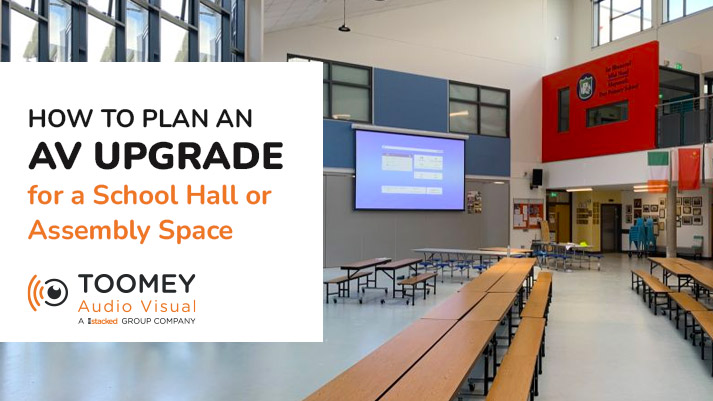
A school hall or assembly space is one of the busiest rooms in any school, so an AV upgrade should be planned around clarity, flexibility, and ease of use. The best systems are not just impressive on paper; they need to work for speeches, presentations, performances, prizegivings and everyday school events.
Start with The Room’s Purpose
Before choosing any equipment, think about how the space is used day to day. Some halls are mainly for assemblies and guest speakers, while others also host drama, music, parent events, or exams. That mix of uses will determine whether you need a simple presentation setup or a more advanced system with stronger audio, better visuals, and easier control. It also helps to identify who will actually use the system. If teachers, office staff, and visiting speakers all need to operate it, the controls should be simple and reliable. A complicated system may look advanced but cause frustration if it is hard to run under pressure.

Assess the School Hall Space
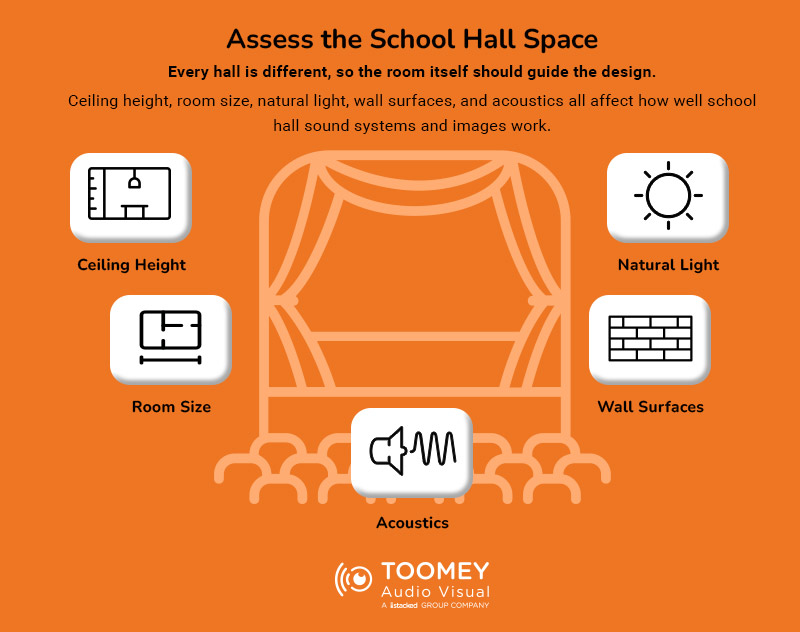
Every hall is different, so the room itself should guide the design. Ceiling height, room size, natural light, wall surfaces, and acoustics all affect how well school hall sound systems and images work. A bright hall with a lot of hard surfaces will need a different approach from a smaller, darker space with better sound absorption. Acoustics are especially important in school halls because speech needs to be heard clearly across the room. If the space is echoey, even good microphones and speakers can struggle. In those cases, acoustic treatment may be just as important as the AV hardware itself.
Build Around Audio First
For most halls, audio is the most important part of the upgrade. If people cannot hear the speaker clearly, the whole system fails. A good design may include ceiling or wall speakers, wireless microphones, handheld microphones, lapel mics, and a mixer or DSP system to balance everything properly.
It is worth planning for both speech and music. A system that sounds fine for an assembly may not be suitable for a choir, band, or school show. Choosing the right audio setup from the start helps avoid future add-ons and keeps the hall flexible for different events.

Choose the Right School Hall Display
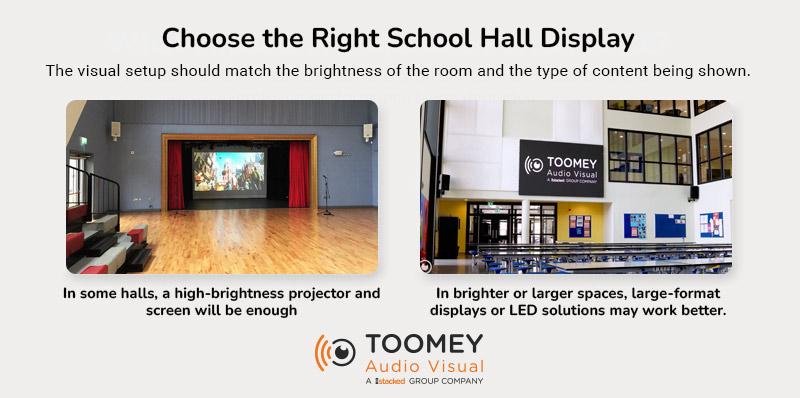
The visual setup should match the brightness of the room and the type of content being shown. In some halls, a high-brightness projector and screen will be enough. In brighter or larger spaces, large-format displays or LED solutions may work better. Think about visibility from the back of the room as well as the front. Text, slides, videos, and live feeds should all be easy to see. If the hall is used for performances, the screen or display should also be positioned so it does not interfere with the stage or audience sightlines.
Keep AV Controls Simple
The easiest AV systems are the ones staff actually use. One-touch control panels, clear input selection, and labelled presets make a huge difference in daily operation. The goal should be to let a teacher or admin user turn the system on, choose the source, and start the event without needing technical support. This is also where training matters. Even a well-designed system can be underused if nobody feels confident operating it. A short handover, simple user guide, and clear naming of controls can prevent unnecessary callouts and mistakes.
Plan Your School Hall AV Upgrade for Future Use
A school hall AV upgrade should not only solve today’s problems. It should also leave room for future events, new teaching methods, and possible technology changes. That means allowing spare capacity in cabling, rack space, inputs, and control options where possible. Future-proofing also applies to maintenance and servicing. Equipment that is easy to access, update, and support will last longer and cause fewer disruptions. A well-planned installation should reduce stress for staff, not create another system to manage.
Budget in Phases
Not every hall needs a full rebuild at once. In many schools, the best approach is to prioritise the most urgent fixes first, such as audio clarity or display visibility, and then phase in further improvements later. This makes the project more manageable and helps the school get value from the upgrade sooner. A phased plan also helps when budgets are tight. You can start with the most important items, then build toward a more complete solution over time. That approach is often more practical than waiting for the perfect full-budget project.
Work with the Right Installer
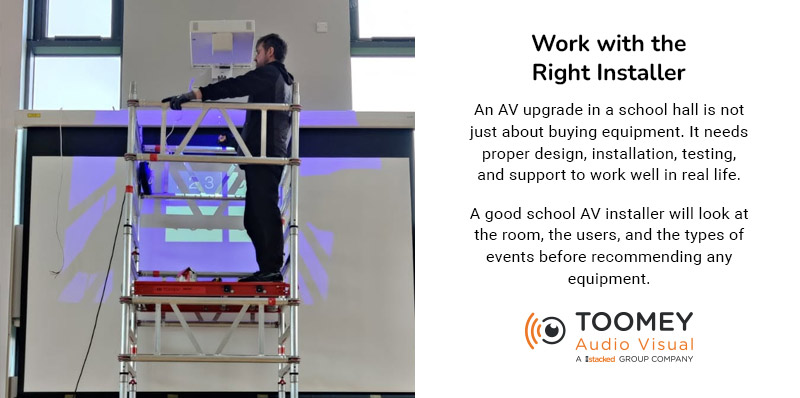
An AV upgrade in a school hall is not just about buying equipment. It needs proper design, installation, testing, and support to work well in real life. A good school AV installer will look at the room, the users, and the types of events before recommending any equipment.
They should also help with training, maintenance, and aftercare. That matters because school halls are busy spaces, and the system needs to remain dependable long after installation day. The best results usually come from a solution that is built around the school’s actual needs rather than a generic package. Give us a call now on +353 1 4660515 or contact us online to see how we can help with your school AV upgrade.